
Wheat
Specifications:
Component | Average Range | Standard Basis (12-14% Moisture) |
Carbohydrates (Starch) | 60% – 75% | Mostly amylopectin and amylose. |
Protein (Gluten) | 8% – 16% | Higher in Hard wheats; lower in Soft wheats. |
Moisture Content | 10% – 14.5% | Standard for safe storage is <13.5%. |
Lipids (Fats) | 1.5% – 2.5% | Concentrated primarily in the germ. |
Minerals (Ash) | 1.2% – 2.0% | Measures the inorganic residue (minerals). |
Dietary Fiber | 2% – 12% | High in whole grain/bran; low in refined flour. |
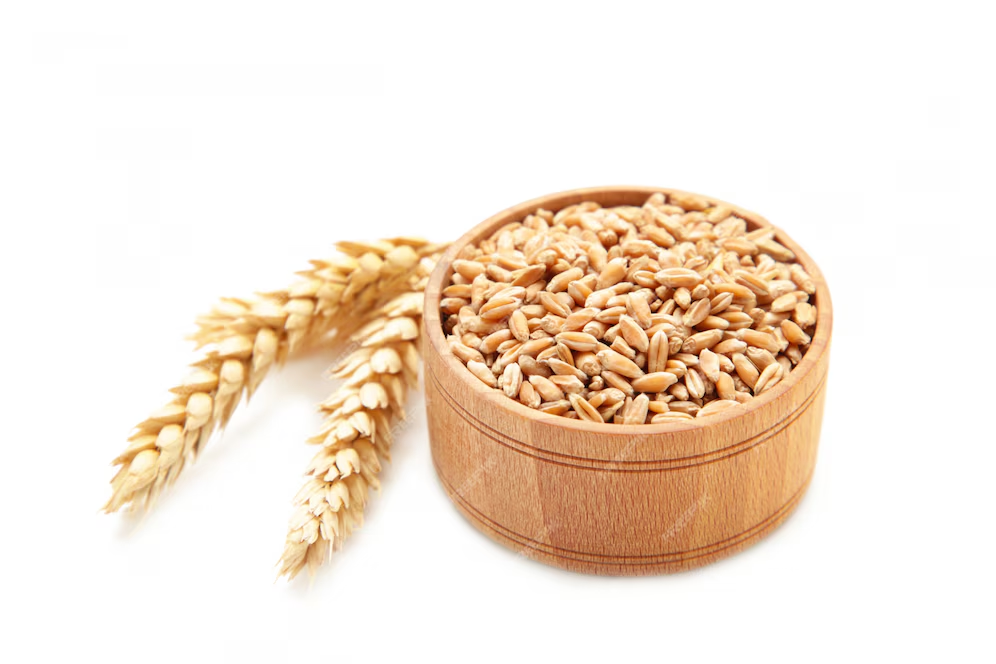
General Physical Description:
- Shape: Most wheat kernels are oval or egg-shaped (ellipsoidal). One side (the dorsal side) is smoothly rounded, while the opposite side (the ventral side) features a deep longitudinal groove called the crease.
- Size: A typical kernel is roughly 5–9 mm in length and 5–3.5 mm in width.
- Weight: An average kernel weighs between 30 and 50 mg.
- Color: Most common wheats are red (ranging from light brownish-red to dark copper) or white (ranging from creamy white to pale yellow). Rare varieties may also appear purple, blue, or amber (common in Durum wheat).
- Texture (Hardness):
- Hard Wheat: Kernels are physically harder to break and often have a vitreous (glassy or translucent) appearance. These are typically higher in protein.
- Soft Wheat: Kernels are more opaque, “mealy,” and easier to crush. They appear chalky or white when cut open.